
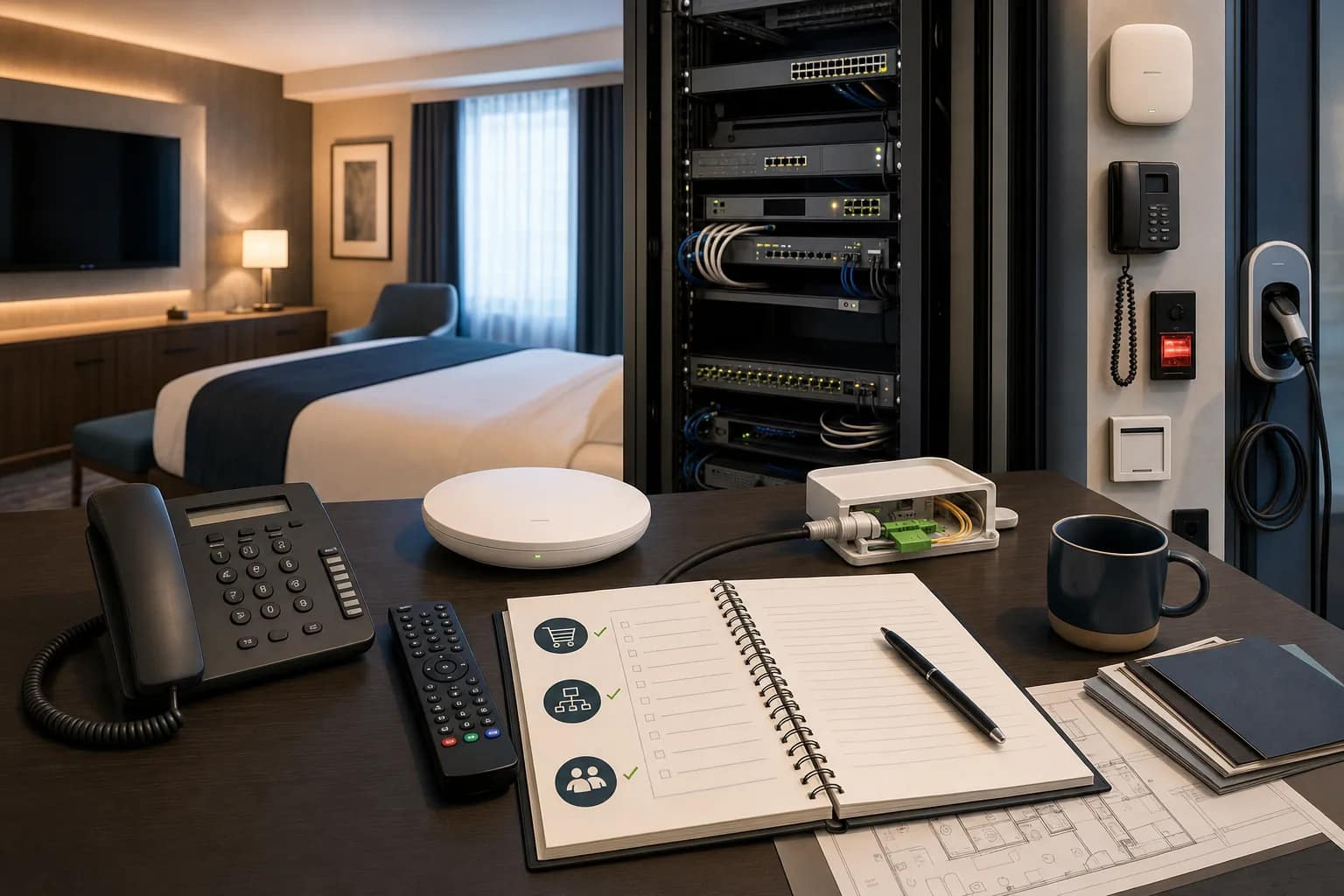
This week, the same lesson kept showing up in different hotel technology refresh conversations: the expensive surprise is rarely the new device.
It is the dependency that nobody mapped before the quote became a schedule.
A TV order, phone refresh, Wi-Fi upgrade, circuit change, or low-voltage package may look like a single line item. At the property level, it usually touches vendors, rooms, closets, support paths, guest expectations, and the staff who have to explain problems when something breaks.
Here are three practical lessons hotel operators can carry into the next refresh conversation.
1. Order timing is part of the technology scope
Before approving equipment, confirm the operational details around the order:
- where hardware will be delivered
- who receives and counts it
- whether storage creates insurance, lender, or ownership questions
- what must be onsite before installers arrive
- who owns replacements if equipment is damaged, delayed, or missing
Hotel technology projects often get harder when the purchasing decision is treated as separate from installation readiness. A property can have the right equipment and still lose time if delivery, storage, room access, cabling, or vendor sequencing was not part of the plan.
2. Circuit and network changes are rarely just bandwidth changes
A fiber, DIA, or carrier change can improve the property, but it can also expose old dependencies.
Before the cutover date is locked, operators should ask what still depends on the current path:
- guest Wi-Fi and managed network equipment
- TV, casting, or Free-to-Guest systems
- PBX, SIP trunks, or hosted voice paths
- firewall rules and static IP allowlists
- back-office devices, cameras, or vendor portals
- remote monitoring and support escalation
The circuit order is the easy part. The dependency map is where downtime is usually prevented.
3. A phone refresh is not just a handset decision
PBX and room-phone projects can look simple until the old voice path is removed.
Before replacing phones, confirm how the refresh affects:
- front desk routing
- guest-room dialing behavior
- elevator, emergency, and life-safety phone paths
- fax, alarm, or analog edge cases
- SIP trunks, carrier handoffs, firewall rules, and gateways
- room access, closets, patching, and post-cutover testing
The quote may say “phones.” The project usually says voice, network, low voltage, carrier coordination, and guest-service continuity.
The operator takeaway
A useful hotel technology refresh checklist should not only ask what the property is buying. It should ask what the new system touches, who owns each handoff, and how the property will verify the result before guests or staff feel the gap.
JET Hotel Solutions helps hotel teams review refresh scopes across network access, guest Wi-Fi, PBX/phones, Free-to-Guest TV, low voltage, CCTV, vendor coordination, and support ownership before a project turns into a cutover problem.
If your hotel is planning a TV, phone, Wi-Fi, circuit, CCTV, or connected-room refresh, JET can help review the scope before ordering, scheduling, or cutover dates are locked.