
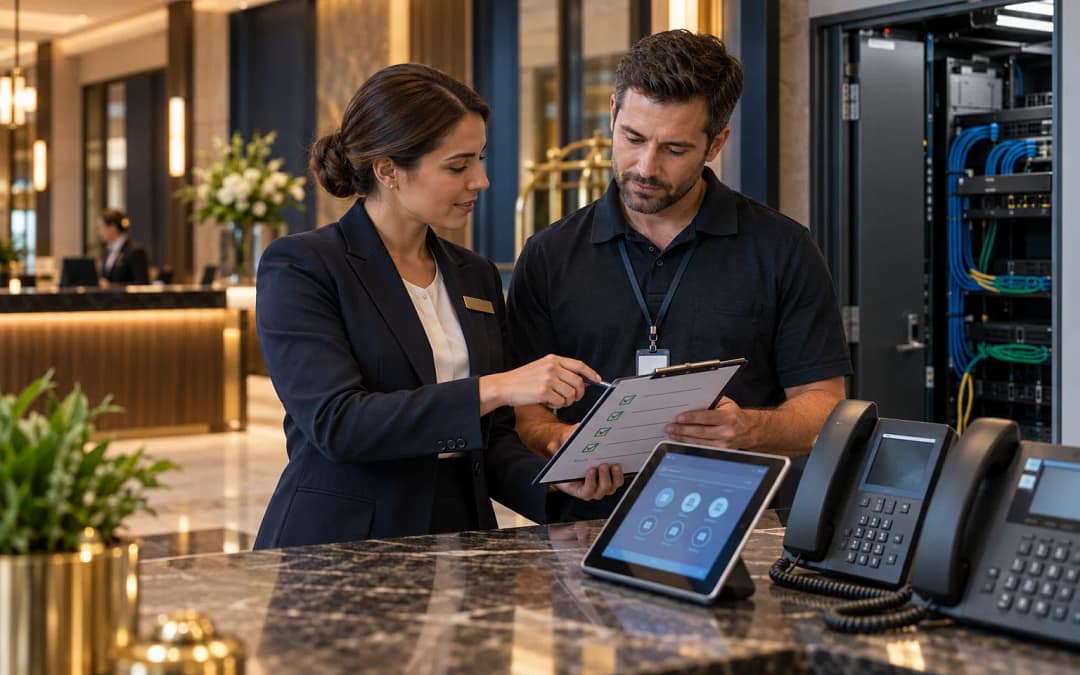
Hotel PBX systems are easy to ignore until a phone cutover disrupts the front desk, a guest room handset stops reaching the operator, or an emergency call path is not clearly documented. For hotel owners and operators, the phone system is not just another telecom line item. It touches guest service, staff escalation, emergency response, vendor coordination, and the way the property keeps operating after hours.
A good PBX upgrade starts before a vendor quote. The property needs to understand what the current system supports, what must keep working during transition, and who owns each decision. This checklist gives hotel teams a practical way to review the phone environment before replacing equipment, moving to VoIP, changing carriers, or renovating guest rooms.
Start with the calls that protect the guest experience
Before comparing platforms, list the calls that matter most to daily hotel operations. Guest room phones, front desk lines, housekeeping extensions, engineering contacts, elevator or life-safety lines, modem or fax dependencies, and management escalation numbers should all be documented. Even if some of these paths feel old-fashioned, they may still support real operational habits.
The key question is not simply whether a new PBX can make and receive calls. The better question is whether staff and guests can still reach the right person at the right moment. A beautiful cloud phone system is not a win if the night auditor cannot transfer an urgent maintenance call or if guest room labels no longer match the actual extension plan.
Map the current PBX before replacing it
Many hotel PBX systems have years of quiet changes behind them. Extensions may have been added during a renovation, call forwarding may route to a manager’s mobile phone, and some analog lines may support systems that nobody thinks about until cutover night. Owners should ask for a current extension map, carrier inventory, handset list, and call-flow diagram before approving the new design.
This is where JET’s PBX background matters. If your team needs a plain-English starting point, JET supports hotel PBX systems as part of a larger hospitality technology environment, and JET’s guide to the hotel PBX room explains what these systems do and why they still matter inside operations. The upgrade checklist should then turn that understanding into a property-specific migration plan.
Separate guest room phones from staff communication
Guest room phones and staff phones should not be treated as one identical requirement. Guest room handsets support wake-up calls, front desk access, emergency dialing, housekeeping requests, and brand expectations. Staff phones support operational speed, transfers, paging, vendor coordination, and after-hours support. The replacement system needs to account for both sets of use cases.
For guest rooms, verify handset condition, labeling, voicemail behavior, wake-up-call workflow, room-number mapping, and emergency call routing. For staff, confirm ring groups, hunt groups, shared lines, mobile forwarding, voicemail ownership, and escalation paths. If the team only reviews monthly cost, the property can miss the operational details that create guest friction later.
Confirm 911 and location requirements early
Emergency calling deserves its own section in every hotel PBX systems review. In the United States, multi-line telephone systems are affected by Kari’s Law and RAY BAUM’s Act requirements around direct 911 dialing, notifications, and dispatchable location. The FCC maintains guidance for MLTS 911 requirements, and hotel teams should review requirements with qualified telecom and legal advisors before a cutover.
At the property level, the practical work is straightforward: confirm that emergency calls can be placed directly, that the right on-site or off-site notification occurs, and that responders receive useful location information. For hotels, “location” may need to account for rooms, floors, buildings, meeting spaces, back-of-house areas, and phone devices that move during renovation or replacement.
Plan the cutover like an operations event
A PBX upgrade should have a cutover plan, not just an install date. The plan should name the vendor lead, hotel owner, test windows, rollback path, guest-impact assumptions, and after-hours contact. It should also include a test script: inbound calls, outbound calls, room-to-front-desk calls, emergency call procedures, voicemail, wake-up calls, transfers, and key staff groups.
This is where hotel operators can borrow from a broader after-hours IT support plan. If a phone problem happens at 11:30 p.m., the front desk should know who receives the first call, what evidence to collect, and which vendor gets escalated. A clean handoff keeps the issue from turning into a confusing chain of screenshots, voicemails, and half-remembered details.
Check network and low-voltage dependencies
Modern hotel phone projects often touch more than the phone vendor. VoIP phones may depend on switches, VLANs, PoE budgets, internet circuits, firewall rules, cabling, and closet power. Analog devices may need adapters or a different support plan. Elevator phones, fire alarm lines, pool phones, and other special-use devices may require separate review before the old service is removed.
Before approving the final scope, ask whether the PBX vendor, network provider, low-voltage contractor, and hotel operations team agree on boundaries. Who supplies handsets? Who labels rooms? Who patches switch ports? Who verifies analog life-safety lines? Who owns the carrier port? If these answers are missing, the project may be technically correct but operationally messy.
Close the project with proof, not assumptions
The final step is acceptance. A hotel PBX systems upgrade should close with documented test results, extension maps, admin access ownership, carrier details, vendor support contacts, emergency call procedures, and staff-facing instructions. The property should know what changed, what stayed the same, and what to do when the first issue appears.
For owners, the best outcome is not simply a newer phone platform. It is a phone environment that staff can operate, guests can use, vendors can support, and managers can audit. If your hotel is planning a PBX replacement, VoIP migration, or phone-system cleanup, schedule a hotel PBX readiness review with JET before the cutover date becomes the only plan.