
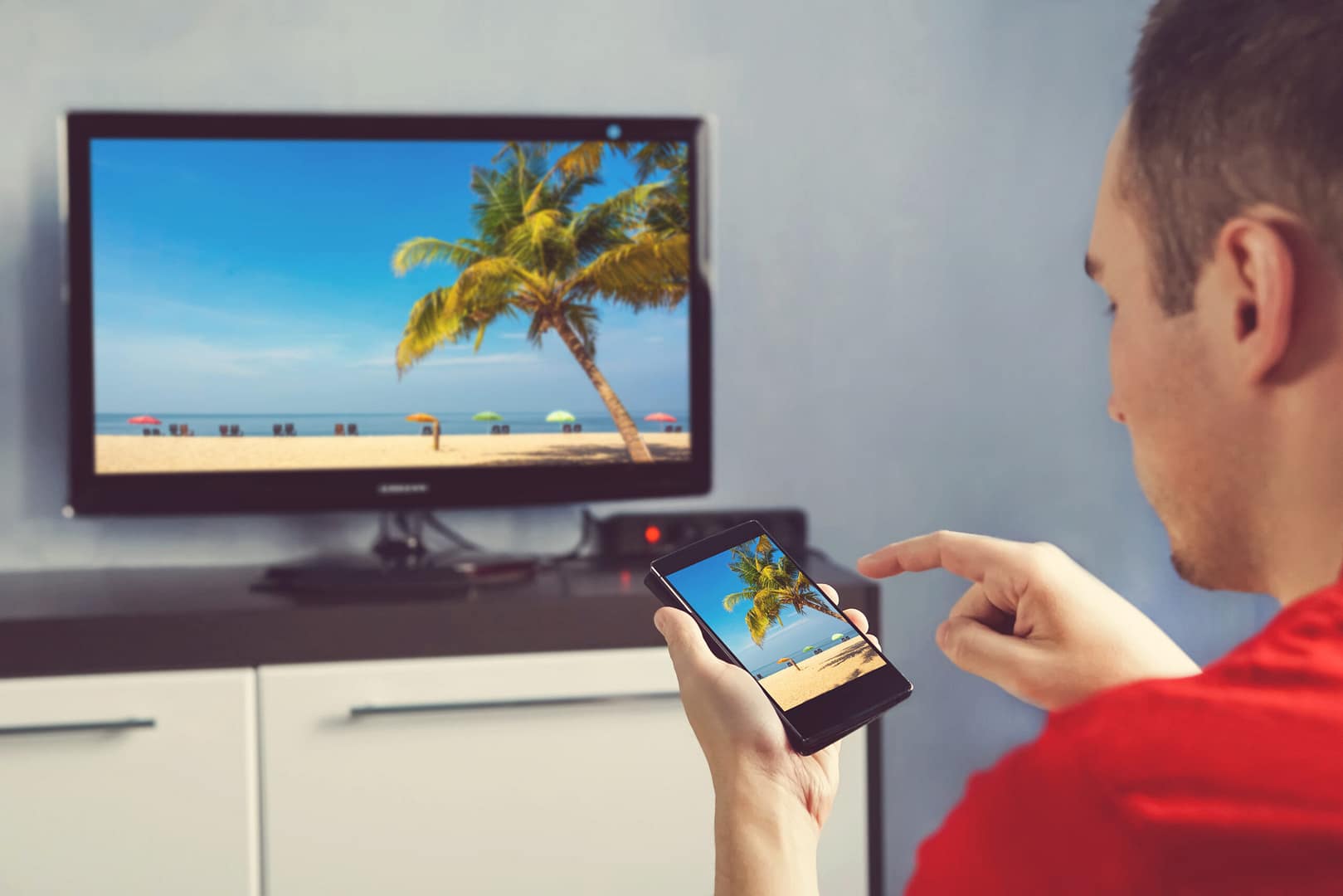
A hospitality TV system decision should start with the operating model, not the screen size. The owner needs to know how programming reaches the room, how guests cast content, what the brand requires, which network paths are involved, who supports the system, and what evidence proves the property is ready before rooms go back into service.
That is why a hotel TV refresh is rarely just a television purchase. It can touch free-to-guest programming, IPTV middleware, casting, coax or Ethernet pathways, Wi-Fi capacity, PMS integration, content security, guest privacy, procurement timing, and the support desk that receives the first call when the guest cannot watch what they expect.
Treat programming, distribution and guest casting as separate decisions that must work together. Agree on the content package, its delivery path and the personal-device experience, then test the combined room experience and support handoff.
Start with the operating model, not the device
The first decision is not whether a room gets a larger display. It is how the hotel wants guest-room entertainment to operate after installation. A select-service renovation, a conversion, a resort tower, and an extended-stay property can all need different answers.
Before pricing equipment, ownership should define the target state:
- Will the property keep a traditional free-to-guest TV lineup?
- Will content be distributed over coax, Ethernet, Wi-Fi, or a hybrid path?
- Will guests need casting from personal devices?
- Will the brand require a specific platform, welcome screen, app experience, or channel package?
- Will the system connect to the PMS, property app, or guest messaging workflow?
- Who owns support after turnover: the TV vendor, carrier, network provider, brand help desk, management company, or property team?
Those questions help avoid a common mistake: buying screens before the property has agreed on the distribution path, network dependency, room standard, support model, and acceptance evidence.
Compare FTG, IPTV, and casting as one system
For an owner-side implementation view, use this IPTV system acceptance checklist before approving the vendor proposal.
Free-to-guest TV, IPTV, and casting are often discussed as separate products. In operations, they behave like one guest-room entertainment system. A property may need linear programming, local channels, property information, streaming access, guest-device casting, and central management. The right design depends on the building, brand, budget, and support capability.
| Layer | Owner decision | Evidence to request |
|---|---|---|
| Programming and content rights | Which authorised channel/content package will guests receive? | Channel line-up, contract/rights scope and applicable brand acceptance. |
| Distribution and room endpoints | How will the selected content reach compatible room equipment? | RF/coax, IP or hybrid path; equipment compatibility, network dependencies and room test results. |
| Guest casting | How will a guest’s own device pair, remain room-specific and clear at checkout? | Pairing/isolation, checkout-reset and first-line support tests. |
Traditional FTG can still be the right answer when a property needs reliable channel delivery and simple room operation. IPTV can give hotels more control over content, menus, messaging, and remote management when the network is designed for it. Casting can improve the guest experience, but it requires careful handling of device pairing, room isolation, guest checkout reset, and help-desk scripts.
JET’s guest-facing technology services connect this work across the systems hotel guests actually notice: internet access, Wi-Fi, free-to-guest TV, room entertainment, phones, safety, and the low-voltage paths behind them. If the hotel changes circuits, switching, Wi-Fi, room pathways, or vendor responsibility at the same time, the TV project should not be scoped in isolation.
Check the infrastructure before approving the quote
Review the hotel digital signage scope beside TV and casting decisions so screens, content systems, network paths, and support ownership are not approved separately.
Tie the TV scope back to the property’s hotel network infrastructure plan so coax, Ethernet, Wi-Fi, closets, support paths, and acceptance evidence are reviewed together.
A hospitality TV system can fail in the field even when the quote looks complete. The risk is usually hidden in the building path, network edge, room condition, or support boundary.
Owners should confirm these items before approval:
- Existing coax, Ethernet, riser, and room pathways are documented.
- MDF, IDF, headend, rack, power, and cooling requirements are known.
- Network segmentation and guest-device isolation are planned for casting or IPTV.
- Bandwidth, multicast, VLAN, firewall, and DNS requirements are reviewed with the network owner.
- Room TVs, mounts, remotes, labels, and spares match the property standard.
- Brand or franchise requirements are captured before purchase orders are released.
- Any PMS, app, welcome-screen, or messaging integration has a named owner.
The point is not to make the project more complicated. The point is to expose the work that already has to be owned before it turns into field delay.
Protect guest privacy and content security
Modern hospitality TV systems often let guests use personal apps, phones, tablets, or laptops. That convenience creates an operating responsibility: the hotel must make it clear how guest sessions are isolated, reset, and removed after checkout.
Hotels should ask each vendor to explain the guest journey in plain language. How does a guest connect? What identifies the room? What happens when the guest checks out? Can a later guest see the previous guest’s account, casting session, search history, or device name? What does the front desk do when pairing fails?
DIRECTV’s hospitality TV management explainer describes the operational idea behind centralized hospitality TV control and property-wide management. That kind of management layer is useful only when the hotel also has a reset process, support path, and room-level acceptance test.
Use procurement to remove support confusion
A clean TV proposal should make support responsibility visible. The owner should be able to see what happens if a guest reports no signal, poor picture quality, missing channels, failed casting, app login problems, a broken remote, or a room that did not receive the expected settings.
That support map should name the first owner, the evidence required to escalate, and the party responsible for closure. Without that map, every issue can become a handoff between the TV platform, carrier, network provider, cabling team, brand desk, and property staff.
For purchase timing and room-level signoff, use JET’s hotel TV procurement checklist before orders are released. Procurement is the easiest time to confirm standards, quantities, accessories, network assumptions, mounting conditions, testing, and spares.
Require acceptance evidence before rooms return to inventory
The acceptance test should prove that the guest experience works, not only that hardware arrived. A useful hospitality TV system closeout includes room samples, guest-path tests, management screenshots, channel validation, casting reset proof when applicable, and a documented escalation path.
At minimum, the closeout package should include:
- Approved model numbers, quantities, locations, and spare inventory.
- Room-by-room or sample-room test records.
- Channel lineup or IPTV content validation.
- Casting or app-pairing test notes, including checkout reset behavior.
- Network configuration assumptions that matter to support.
- Vendor contacts, warranty terms, and after-hours escalation rules.
- Training notes for front desk, engineering, and management staff.
This evidence gives ownership something more useful than a delivery receipt. It gives the property a record of what was installed, how it should work, who owns support, and what to check when guest-room entertainment becomes a service issue.
What JET reviews before a hospitality TV system refresh
JET helps hotel owners and operators turn guest-facing technology decisions into coordinated scopes. For a hospitality TV system, that usually means checking the current room technology, FTG or IPTV direction, network dependencies, low-voltage pathways, procurement timing, vendor responsibility, and acceptance evidence before the project is released into the field.
If your hotel is planning a TV, IPTV, casting, or guest-room entertainment refresh, JET can review the scope before purchase orders create avoidable gaps.