
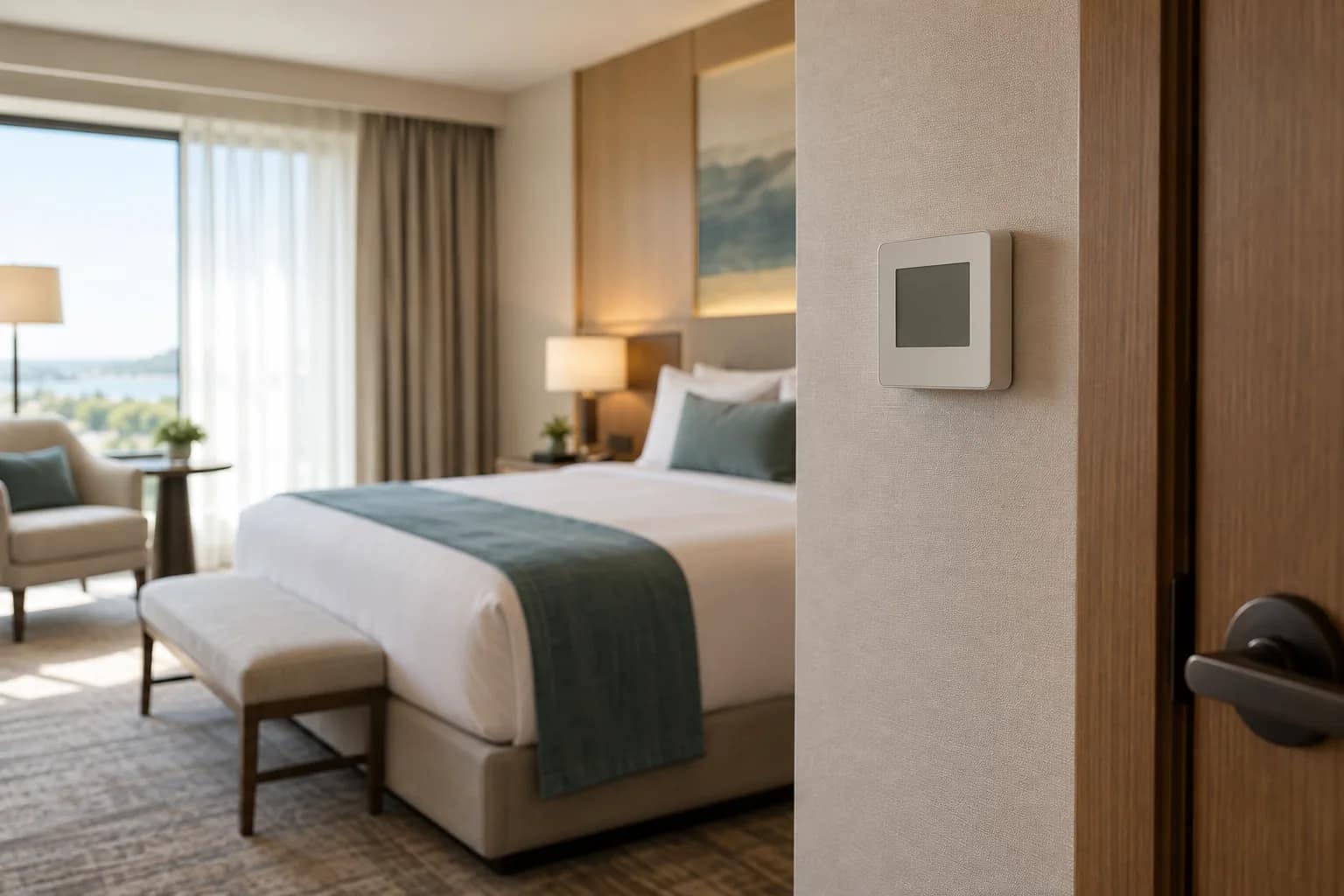
A hotel energy management system does more than let a guest change the temperature. It uses information about a room to decide when heating, cooling, or other connected equipment can step back—and when comfort needs to take priority. The important distinction is between controlling one device and coordinating the room around the stay.
For a hotel considering a guestroom upgrade, three architectures are worth separating: a standalone occupancy-aware thermostat, an integrated room-control system, and a networked system with property-level visibility. None is automatically the right answer for every building. Their differences are in the information they can use, the equipment they can coordinate, and the visibility they provide.
A thermostat setting is not the same as room status
Consider three rooms at the same temperature. One guest is asleep. Another has gone to dinner but will return. The third room is unrented for the night. Applying the same aggressive setback to all three may save equipment runtime while creating very different guest experiences.
This is why occupancy logic matters. A motion signal, a door event, and a reservation status describe different things. No motion does not necessarily mean no guest. A room sold for the night does not mean someone is physically inside it. The useful question is which signals the proposed system actually receives and how its configured sequence interprets them.
Verdant’s hospitality documentation, for example, describes occupancy detection, setpoint limits, and dynamic recovery, alongside centralized management and integration options. These are separate capabilities, not synonyms for a thermostat having a digital screen. Product-specific compatibility and configuration still determine what a particular installation can do.
Standalone, integrated, and networked controls
A standalone occupancy-aware thermostat can make local HVAC decisions without requiring a property-wide dashboard. This can suit a focused room-by-room retrofit where the immediate objective is reducing unnecessary conditioning. The tradeoff is that a local device does not, by itself, provide a portfolio view or know whether the PMS considers a room unrented.
An integrated room-control design adds connections between equipment or signals. Depending on the selected products, that may include a door contact, lighting control, humidity sensing, or other room devices. The opportunity is a coordinated room sequence; the corresponding responsibility is defining what each connected device should do. Guest outlets and equipment that must remain powered should not simply be grouped into a general shutdown command.
A networked architecture adds communications and management above the room. It can support remote visibility or PMS-driven behavior when those integrations are actually included. Enkoa’s hotel energy-management range illustrates this distinction by separating guestroom energy control, sensor-based control, and centralized control. A networked design adds capabilities, but also interfaces and service dependencies that a standalone installation may not need.
For an existing property, that distinction belongs in the broader hotel renovation technology scope. A thermostat replacement and a connected guestroom program can look similar in a room photograph while requiring very different integration work behind the wall.
What the platform layer adds: Smartcon as an example
Smartcon Solutions describes its NeuroCore offering as an agnostic cloud platform connecting building systems, guestroom controls, and IoT sensors. Its public materials distinguish standalone occupancy-based EMS, integrated room automation, and networked EMS connected with a PMS. Smartcon also identifies support for multiple third-party guestroom-control brands.
The architectural idea is useful beyond any one supplier: existing room hardware and the management layer do not always have to be replaced together. However, “vendor-agnostic” should not be read as “every device works without qualification.” The exact thermostat model, available interface, control permissions, and supported software version determine whether an integration is practical. This is a product example, not a claim that every hotel needs this platform.
Energy savings and guest comfort need different evidence
A vendor’s reduction in HVAC runtime is not the same measurement as a reduction in a property’s total utility bill. The bill can include lighting, kitchens, laundry, public areas, and other loads outside the guestroom project. Weather, occupied rooms, and operating changes also affect the comparison.
A useful evaluation therefore keeps two views together. The energy view compares a defined baseline and a comparable operating period. The comfort view examines how rooms recover to a guest’s chosen temperature, how sleeping occupancy is handled, and whether complaints or manual overrides increase. A result that improves one view while worsening the other needs investigation, not a marketing headline.
For illustration, a trial across comparable rooms could record HVAC runtime, room availability, relevant outdoor conditions, and comfort feedback before and after the change. This is an evaluation method, not a JET case study or a promised savings percentage. It helps distinguish a controls improvement from a mild-weather month.
Room controls are one part of hotel automation
Room energy management should remain a defined part of the hotel’s wider hotel automation program, rather than becoming a catch-all description for every digital service. Guest temperature preference, front-desk room status, engineering alerts, and portfolio reporting are different functions even when a single platform displays them.
A practical modernization path can preserve usable hardware, improve a specific room-control sequence, and add management functions where they solve a real operating problem. Another property may reasonably choose a simpler local system. The decision should follow the building’s equipment and operating needs—not the assumption that the most connected architecture is always better.
Brand requirements and utility incentives must be checked against the current documents applicable to the property and project. No blanket brand mandate, rebate eligibility, or payback guarantee is implied here. For help defining an appropriate architecture, request a guestroom technology scope review with JET.
Updated September 22, 2026. Product descriptions checked against the linked manufacturers’ public materials. Illustrative imagery is AI-generated and does not depict a client property or a specific vendor product.